Choosing the perfect Bluetooth speaker involves matching its features to your lifestyle and listening environment, with key considerations including durability, battery life, sound quality, and connectivity. For instance, an outdoor adventurer needs an IP67-rated speaker with 12-15 hours of battery life, while a homebody prioritizes sound quality and smart features. By focusing on your primary use case, you can narrow down the options significantly and find a speaker that fits your needs and budget.
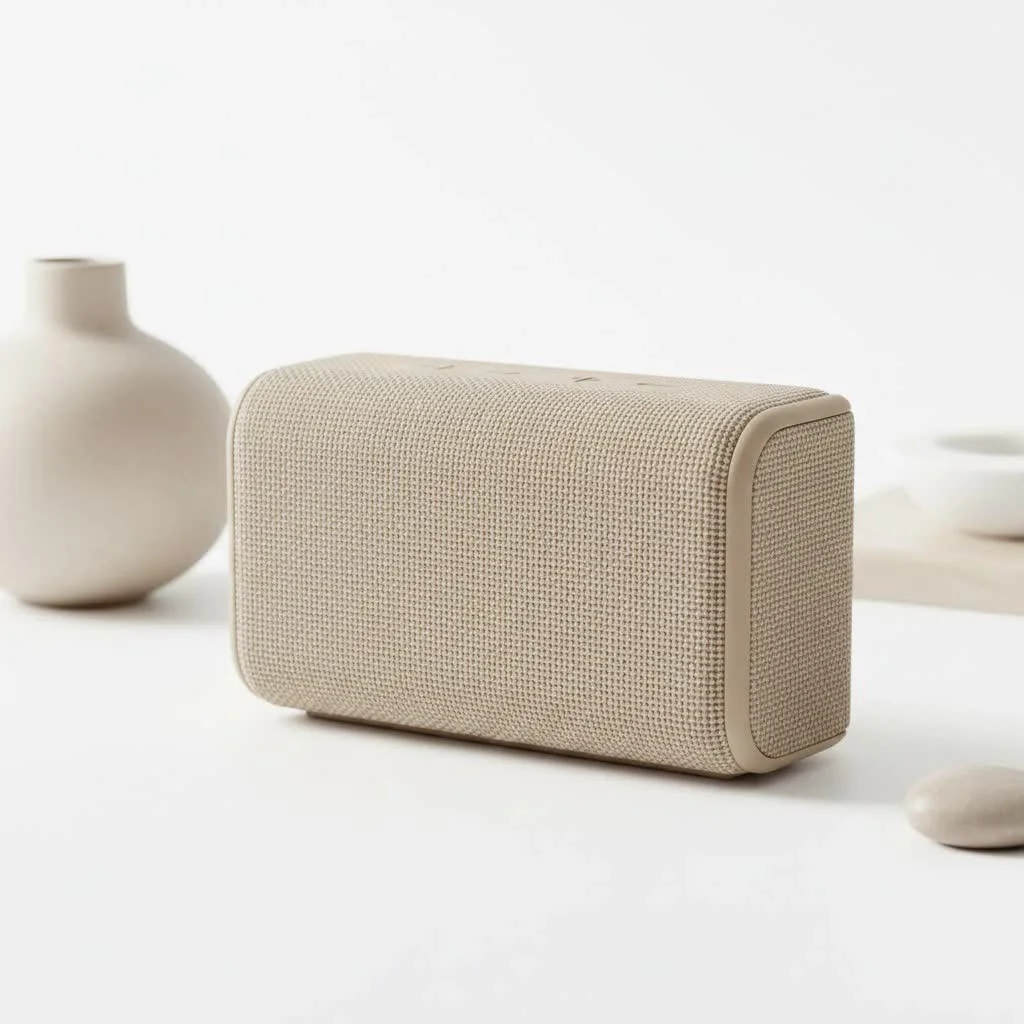
My goal is to demystify the jargon and empower you with the knowledge to choose a speaker that fits your life and your budget. Whether you’re looking for a rugged companion for your hikes or a sophisticated sound system for your living room, this guide will help you find your perfect audio match.
Before You Buy: What’s Your Sound Style?
The first step isn’t to look at specs; it’s to look at your lifestyle. The best speaker for a poolside party is rarely the best for critical listening at home. By identifying your primary use case, you can narrow down the options significantly.
The Outdoor Adventurer
If your soundtrack plays out on hiking trails, beaches, or campsites, your priorities are durability and portability. You need a speaker that can handle a bit of rough and tumble. Look for robust construction with rubberized bumpers and a high IP (Ingress Protection) rating. An IP67 rating is the gold standard here, meaning the speaker is completely dust-tight and can be submerged in up to one meter of water for 30 minutes. Battery life is also crucial—aim for at least 12-15 hours of playback to last a full day out.
The Homebody
For those who primarily listen at home, sound quality and design take center stage. You can opt for larger, less portable models that often deliver richer, more expansive sound. These speakers don’t always need a battery, plugging directly into the wall for continuous power. Features like multi-room audio, allowing you to sync multiple speakers throughout your home, and integration with smart assistants like Alexa or Google Assistant become much more valuable. Aesthetics also matter more when a speaker becomes a permanent part of your decor.
The Party Starter
If you’re the go-to host, you need a speaker that can fill a space with powerful, bass-heavy sound. Look for larger models with multiple drivers and, crucially, passive radiators to produce that low-end thump you can feel. Power output, measured in watts, is a key consideration here, as is the ability to pair with other speakers for an even bigger soundstage—often called “Party Mode.” A long-lasting battery ensures the music doesn’t stop before the party does.
Decoding the Tech Jargon: What Really Matters
Once you know your style, you can start digging into the specs. Don’t worry, I’ll make this simple.
Sound Quality: More Than Just Loudness
|
Our Picks for the Best Bluetooth Speaker in 2026
As an Amazon Associate I earn from qualifying purchases.
|
||
| Num | Product | Action |
|---|---|---|
| 1 | Ortizan Portable Bluetooth Speaker x Stocking Stuffers: IPX7 Waterproof, Wireless, Big Sound, Deep Bass, Dual Pairing, 30H Playtime, White Elephant Gift for Adults Men Women Teen Boys Girls (Black) |

|
| 2 | JBL FLIP 5, Waterproof Portable Bluetooth Speaker, Black, Small |
|
| 3 | Sony SRS-XB100 Wireless Bluetooth Portable Lightweight Super-Compact Travel Speaker, Durable IP67 Waterproof & Dustproof Shower Speaker, 16 Hour Battery, Versatile Strap, & Hands-free Calling, Black |
|
| 4 | Sonos Era 100 - Black - Wireless, Alexa Enabled Smart Speaker |
|
| 5 | Amazon Echo Dot, Vibrant-sounding speaker with Alexa+ Early Access, Great for bedrooms, dining rooms and offices, Charcoal |
|
| 6 | Bose SoundLink Flex Bluetooth Speaker (2nd Gen) - Portable Outdoor Speaker with Hi-Fi Audio, Waterproof and Dustproof, USB-C, Up to 12 Hours Battery Life, Sandstone |
|
| 7 | JBL Flip 6 - Portable Bluetooth Speaker, powerful sound and deep bass, IPX7 waterproof, 12 hours of playtime, JBL PartyBoost for multiple speaker pairing for home, outdoor and travel (Blue) |
|
| 8 | Bluetooth Speaker with HD Sound, Portable Wireless, IPX5 Waterproof, Up to 20H Playtime, TWS Pairing, BT5.3, for Home/Party/Outdoor/Beach, Electronic Gadgets, Birthday Gift (Black) |
|
| 9 | JBL Clip 5 - Ultra-Portable, Waterproof & Dustproof Bluetooth Speaker, Big JBL Pro Sound with Punchy bass, Integrated Carabiner, Up to 12 Hours of Play, Made in Part with Recycled Materials (Black) |
|
| 10 | W-KING Party Loudest Portable Bluetooth Speaker Wireless Boom Box, 180W Max Big Large Outdoor Speaker 4 Drivers with 2*4.04\'\' Subwoofer, 80W HD Huge 105dB Pulse Natur Deep Bass, IPX5/24H/EQ/USB/TF/AUX |
|
This is the most subjective, yet most important, factor. Great sound is about balance.
- Drivers: These are the actual speaker components that create sound. While a larger driver can move more air and produce better bass, the quality of the materials and engineering is just as important.
- Passive Radiators: Many small portable speakers use these vibrating surfaces to enhance bass output without needing a dedicated subwoofer. They are essential for getting a rich, full sound from a compact device.
- Frequency Response: This is the range of sound a speaker can produce, from the lowest bass to the highest treble. The ideal range for human hearing is 20Hz to 20,000Hz (20kHz). Most good speakers will cover the majority of this range.
Battery Life: Don’t Let the Music Die
For any portable bluetooth speaker, battery life is a key feature. Manufacturers’ claims are often based on testing at medium volume. Keep in mind that playing music at full blast will drain the battery much faster. For general use, look for a speaker with at least 10-12 hours of playtime. Also, consider the charging method. USB-C is the modern standard, offering faster charging and the convenience of using the same cable as your other devices.
Durability: Built for Real Life
Life happens. Your speaker might get knocked off a table or caught in the rain.
- IP Ratings Explained: This two-digit code tells you how resistant a device is to solids and liquids. The first digit is for solids (like dust), and the second is for water. An “X” means it hasn’t been rated for that category. For example:
- IPX4: Splash-proof. Fine for a little rain.
- IPX7: Waterproof. Can be fully submerged.
- IP67: Dust-tight and waterproof. The go-to for outdoor use.
- Build Materials: Look for speakers with sturdy grilles, rubberized casings, and high-quality fabrics that can withstand daily use.
Connectivity: Beyond Just Bluetooth
- Bluetooth Version: Look for Bluetooth 5.0 or higher. This ensures a more stable connection, longer range (up to 800 feet in open spaces, though realistically much less with obstacles), and better energy efficiency.
- Multi-Speaker Pairing: Many brands offer the ability to connect two of the same speakers for true stereo sound (one acts as the left channel, one as the right) or link dozens together in a “party mode” for synchronized audio.
- Wired Options: Don’t underestimate the value of a 3.5mm AUX input. It’s a reliable backup if Bluetooth is acting up and allows you to connect older devices like MP3 players.
Smart Features: Nice-to-Haves or Necessities?
Modern speakers often do more than just play music. Voice assistants like Amazon Alexa and Google Assistant can be built-in, turning your speaker into a smart home hub. You can ask for the weather, set timers, or control your smart lights with your voice. While incredibly useful for some, these features aren’t necessary if you just want a straightforward, high-quality audio experience.
As a sound engineer, Elena Petrova, once told me, “People get lost chasing every feature on the box. The best sound system is the one you actually use. Focus on how and where you’ll listen 90% of the time, and you’ll make the right choice. A waterproof speaker is useless if it never leaves your pristine living room.”
My Pro Tips for Testing a Bluetooth Speaker
If you have the chance to test a speaker in person, here’s what I do:
- Use Your Music: Play a few songs you know inside and out. Choose tracks with a good dynamic range—clear vocals, deep bass, and crisp high-hats.
- Crank It Up: Gradually increase the volume. Does the sound stay clear, or does it become distorted and harsh at high levels? A good speaker should maintain its composure.
- Check the Connection: Walk away from the speaker with your phone to test the Bluetooth range in a real-world environment.
- Feel the Build: Pick it up. Does it feel solid and well-made, or light and flimsy? The physical quality often reflects the quality of the components inside.
Frequently Asked Questions (FAQ)
How many watts do I need for a bluetooth speaker?
For personal or small room listening, 5-10 watts is plenty. For a medium-sized room or a small outdoor gathering, look for 15-20 watts. For serious parties that need to fill a large space, 40 watts or more is recommended.
Can I use a bluetooth speaker while it’s charging?
Yes, most modern Bluetooth speakers are designed to be used while they are plugged in and charging without damaging the battery.
Does a higher Bluetooth version mean better sound quality?
Not directly. A higher Bluetooth version (like 5.2 vs 5.0) primarily improves range, stability, and efficiency. Sound quality is more dependent on the audio codecs supported (like SBC, AAC, and aptX) and the quality of the speaker’s own drivers and internal components.
What is an IP67 rating and do I need it?
IP67 means the speaker is completely protected from dust and can be submerged in 1 meter of water for up to 30 minutes. You absolutely need this if you plan to take your speaker to the beach, pool, or on dusty trails. For home use, it’s a nice-to-have for peace of mind but not essential.
How can I improve the bass on my portable speaker?
Placement is key. Placing your speaker near a wall or in a corner can naturally amplify its bass response as the sound waves reflect off the surfaces.
Your Perfect Sound Awaits
Choosing a bluetooth speaker doesn’t have to be complicated. By focusing on your personal lifestyle first, you can easily determine which features are truly important. The ultimate speaker is the one that seamlessly integrates into your daily life, providing the soundtrack you want, wherever you happen to be. Whether it’s a rugged, pocket-sized companion or a powerful home audio centerpiece, the right choice is out there. Now go and let the music play
Frequently Asked Questions
How many watts are needed for a Bluetooth speaker?
For personal listening or small rooms, 5-10 watts are sufficient. A medium-sized room or small outdoor gathering benefits from 15-20 watts, while parties requiring significant volume should consider speakers with 40 watts or more.
Can a Bluetooth speaker be used while charging?
Yes, most modern Bluetooth speakers are designed to operate normally while plugged in and charging, without causing damage to the battery or performance.
Does a higher Bluetooth version improve sound quality?
A higher Bluetooth version, such as 5.2 compared to 5.0, primarily enhances connection range, stability, and energy efficiency. Sound quality is more directly influenced by the speaker's audio codecs (like aptX) and the quality of its internal drivers and components.
What does an IP67 rating mean for a speaker?
An IP67 rating indicates that a speaker is completely protected against dust ingress and can withstand submersion in up to 1 meter of water for 30 minutes. This rating is essential for outdoor use at beaches, pools, or on dusty trails, offering peace of mind for rugged environments.
What is the best way to improve bass on a portable speaker?
To enhance bass response on a portable speaker, strategic placement is crucial. Positioning the speaker near a wall or in a corner allows sound waves to reflect off surfaces, naturally amplifying the bass output.
How to Test a Bluetooth Speaker Before Buying
Follow these professional tips to effectively test a Bluetooth speaker in person and ensure it meets your audio expectations.
Play several songs you are intimately familiar with, choosing tracks that feature a wide dynamic range, including clear vocals, deep bass, and crisp high-hats. This helps you assess the speaker's ability to reproduce various frequencies accurately.
Gradually increase the speaker's volume to its higher levels. Observe if the sound remains clear and composed, or if it becomes distorted, harsh, or loses fidelity at peak volumes. A quality speaker maintains sound integrity even when loud.
Walk away from the speaker with your connected phone to test its Bluetooth range in a real-world setting. This helps determine how stable the connection is and its practical limits within your typical listening environment.
Physically pick up and handle the speaker. Evaluate if it feels solid and well-constructed, or if it seems light and flimsy. The tactile quality often provides insight into the durability and internal component quality of the device.
Get our weekly buyer guide
Practical specs, not advice. Unsubscribe anytime.
Finally, a guide that makes sense! I’m an outdoor adventurer, and the emphasis on durability and battery life was spot on. I picked up a speaker based on the suggestions for rugged companions, and it’s been fantastic on my hikes. The sound is clear even outdoors, and it holds a charge for ages.
I appreciated the tips on battery life, but I found it a bit hard to compare specific models based on the general advice. I was hoping for more direct brand comparisons for speakers with 12-15 hours of battery. The speaker I got is good, but the connectivity sometimes drops out, which is a bit annoying.
I was so lost trying to pick a new speaker, but this guide really helped me focus on what I actually needed. I ended up getting an IP67-rated speaker for my camping trips, and the battery life is amazing, just like it said. It’s been through a few splashes already and still sounds great. Definitely recommend thinking about your primary use case first!
Great breakdown of what to look for. I used to just buy whatever was on sale, but considering sound quality for my living room setup made a huge difference. I went with one of the recommended brands for home use, and the audio is so much richer than my old one. It’s not super portable, but that wasn’t my priority anyway.